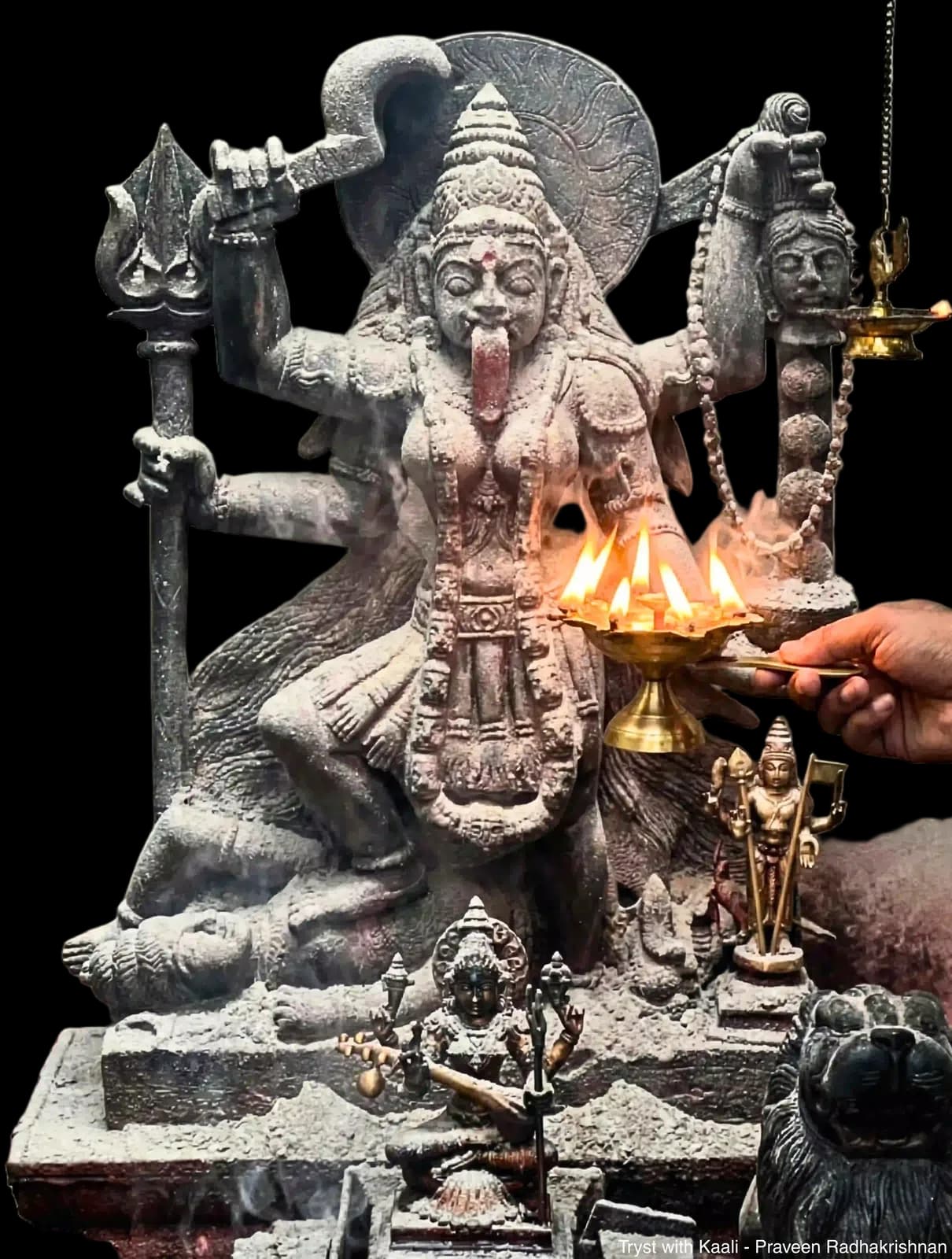
Come as you are. There is no requirement to become perfect before approaching the Divine Mother — Bhakti asks only one question: do you love the Divine?
The first rule of Bhakti is simple: come as you are. There is no requirement to become perfect before approaching the Divine Mother. There is no need to possess great knowledge, wealth, status, or spiritual accomplishments. Bhakti does not ask who you are in society. It asks only one question: Do you love the Divine?
People often forget that devotion itself is the foundation of the path. Before tantra, before mantra, before rituals and procedures, there is bhava. Without bhava, even the grandest offering remains incomplete. With bhava, even the smallest offering becomes priceless.
In Bhakti, there are no superior and inferior devotees. The Mother does not measure bank balances, social positions, academic achievements, or even spiritual achievements. She sees only the heart. A king and a beggar stand equally before her. A scholar and an illiterate devotee stand equally before her. The only qualification is love.
And not ordinary love.
Mad love.
The kind of love where the Mother becomes more important than your own comfort. The kind of love where you remember her in happiness and in sorrow. The kind of love where you speak to her not as a distant deity but as your very own Mother.
That is why all offerings are accepted. One offers according to one's design. One offers according to one's capacity. One offers according to one's circumstances. A flower, a lamp, a prayer, a tear, a smile, a piece of food, a simple act of service when offered with sincerity, all of it reaches her.
The greatest examples of Bhakti were rarely concerned with appearances. Paramesthi Guru Bamakhyapa is perhaps one of the most beautiful examples of this truth. His relationship with Maa was not built on rigid formalities. It was built on an intensity of love so pure that social conventions no longer mattered. He did not approach the Mother with calculation. He approached her as a child approaches its mother.
He could laugh with her, cry before her, complain to her, argue with her, and even shout at her. To an outsider this may appear strange. But the Mother saw the truth behind it. There was no ego. There was no demand. There was only love.
A child may scream at its mother, yet the mother smiles because she understands the heart behind those words. In the same way, Maa accepted everything from Bamakhyapa because every action arose from pure devotion. The bhava was so intense that even what the world considered unacceptable became acceptable to the Mother because she saw only the love of her child.
This is the secret of Bhakti. The Divine is not looking for perfection. The Divine is looking for sincerity. A perfect ritual without love remains hollow, while a single heartfelt call of “Maa” can shake the heavens.
So come as you are. Come with your strengths and weaknesses. Come with your confusion and clarity. Come with your victories and failures. Come with your wounds and your hopes. Do not wait to become worthy.
Bhakti begins the moment you realize that the Mother does not need a perfect child.
She only wants her child.
Jai Maa Adhya Mahakali ❤️